Yoga Types
Ashtanga Yoga
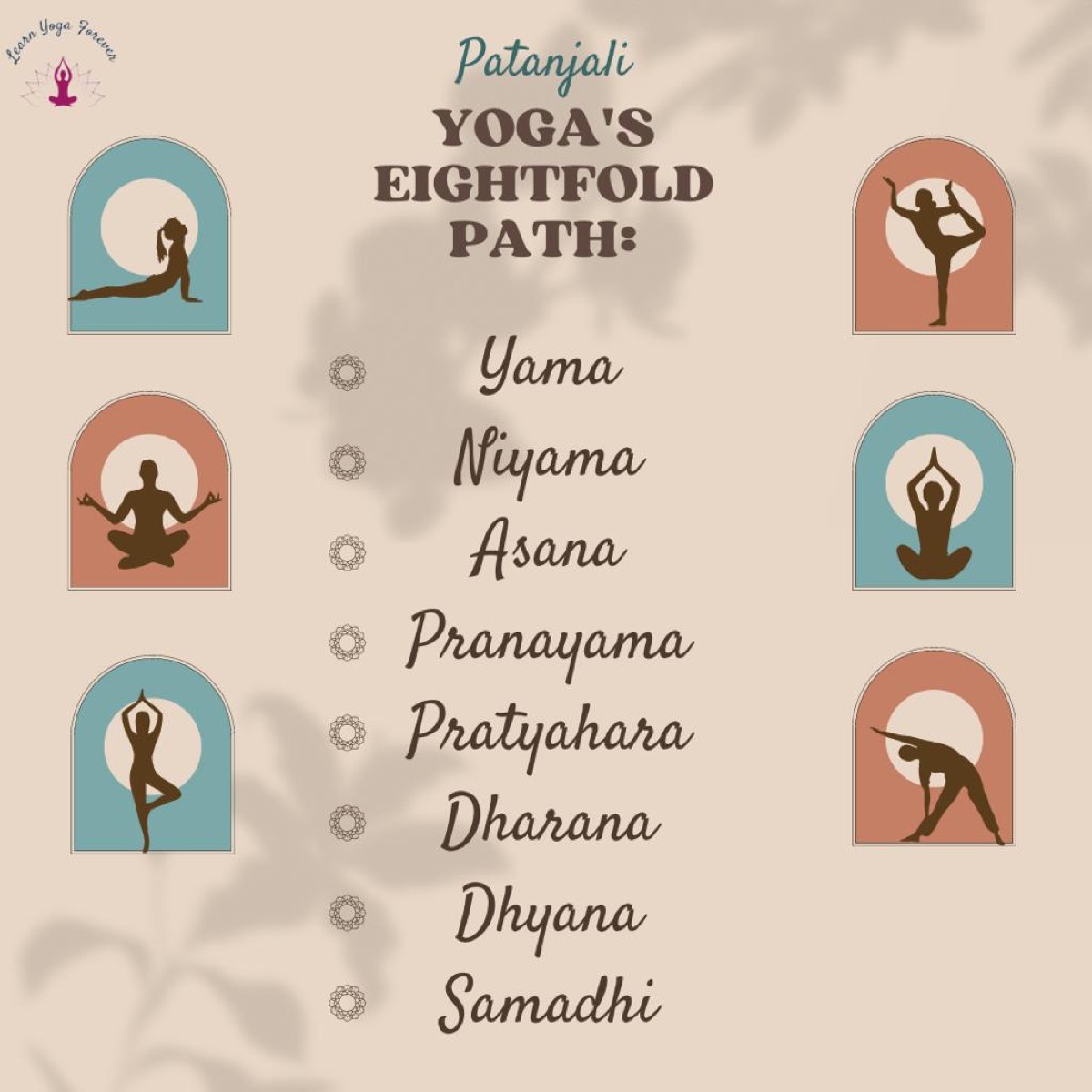
Ashtanga means “eight limbs”. The term refers to two related things: the eight-limbed path of yoga described in Patanjali's Yoga Sutras, and Ashtanga Vinyasa Yoga, a dynamic style of posture practice taught by K. Pattabhi Jois in Mysore, in which a set sequence of poses is linked with the breath.
Key takeaways
- Ashtanga = eight limbs (ashta = eight, anga = limb).
- Patanjali's eight limbs cover ethics, posture, breath and meditation.
- Ashtanga Vinyasa is a vigorous, set sequence linked with breath.
- It builds strength, flexibility, stamina and focus.
- Beginners should start with short, modified sessions.
The eight limbs of yoga
| Limb | Meaning |
|---|---|
| Yama | Ethical restraints, such as non-violence and truthfulness |
| Niyama | Personal observances, such as cleanliness and contentment |
| Asana | Posture |
| Pranayama | Breath regulation |
| Pratyahara | Withdrawal of the senses |
| Dharana | Concentration |
| Dhyana | Meditation |
| Samadhi | Absorption |
What an Ashtanga Vinyasa session looks like
Ashtanga Vinyasa follows set series of poses, starting with the Primary Series. Each class typically begins with Sun Salutations (Surya Namaskar A and B), moves through standing and seated poses, and ends with finishing poses and rest. Movements are linked with a steady breath, and practitioners often hold each pose for five breaths.
A traditional “Mysore-style” class lets students practise the sequence at their own pace with individual guidance from the teacher, while “led” classes move together to the teacher's count.
Possible benefits
- Strength and stamina from the flowing, continuous practice.
- Flexibility through regular practice of a consistent sequence.
- Focus and concentration from linking breath, movement and gaze.
- A clear structure that makes progress easy to notice.
Who it suits
- People who enjoy routine, discipline and a physically demanding practice.
- Fit beginners willing to start slowly and modify poses.
- Not ideal as a first style if you have injuries or prefer gentle classes; try Hatha or restorative yoga first.
How beginners can start
Learn Sun Salutations
Start with 3 slow rounds of Surya Namaskar A.
Add standing poses
Gradually add the first standing poses of the Primary Series.
Modify freely
Bend the knees, use blocks, and skip poses you're not ready for.
Find a teacher
A Mysore-style class gives personal guidance at your pace.
Practise safely
Ashtanga Vinyasa is physically demanding. Check with your doctor first if you have a heart condition, high blood pressure, joint problems or are pregnant, and never force a pose.
Make it a tiny habit
Every morning after brushing, do one round of Surya Namaskar A. Add a round each week.
Frequently asked questions
What is Ashtanga Yoga in simple words?
Ashtanga means “eight limbs”. It describes Patanjali's eight-step path of yoga and also a dynamic style where a set sequence of poses is linked with the breath.
What are the 8 limbs of Ashtanga Yoga?
Yama, Niyama, Asana, Pranayama, Pratyahara, Dharana, Dhyana and Samadhi.
Is Ashtanga Yoga good for beginners?
It can be, if you start slowly with modifications or in a Mysore-style class. Complete beginners with low fitness may prefer a gentler style first.
How is Ashtanga different from Power Yoga?
Ashtanga follows fixed sequences in a set order; Power Yoga is a Western, more flexible style inspired by Ashtanga, where the teacher varies the poses.
General wellness information, not medical advice. Please consult a doctor or a qualified professional before starting new exercises, especially if you have a health condition.