Exercises
Wall and Incline Push-Ups
Wall and incline push-ups are easier versions of a push-up done with your hands on a wall, kitchen counter or sturdy bench. The higher the surface, the easier the push-up, which makes them ideal for building strength from zero.
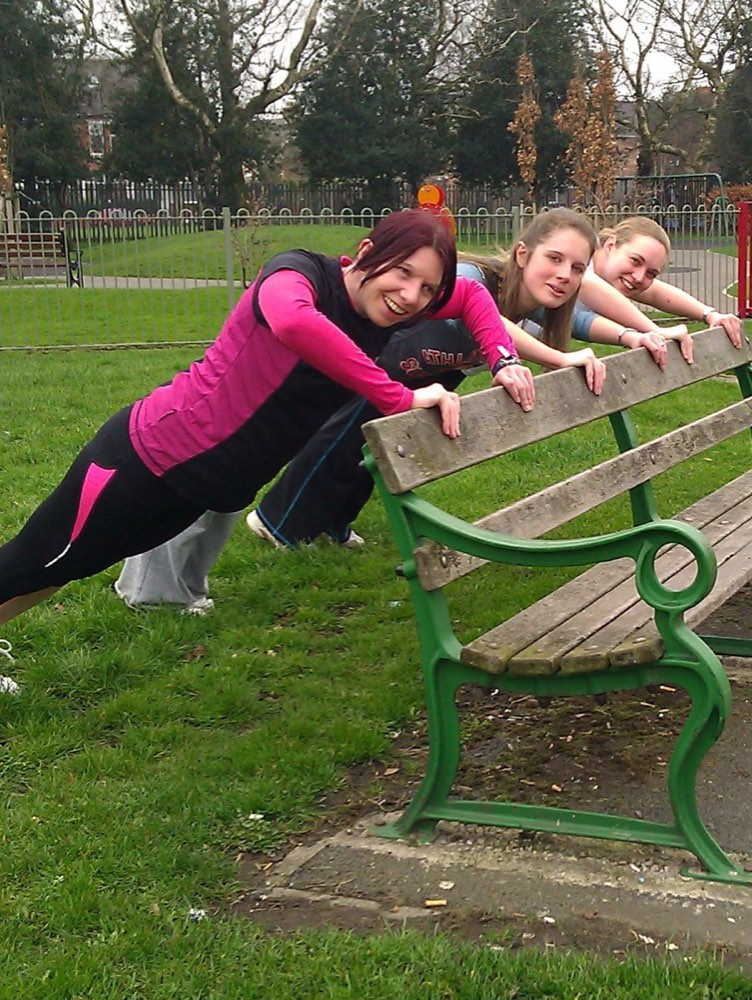
Key takeaways
- Higher surface = easier push-up.
- Keep the body in a straight line.
- Lower the chest slowly, then push away.
- Move to a lower surface over time.
How to do an incline push-up
Pick a surface
Start with a wall, then a kitchen counter or sturdy bench.
Hands
Place hands slightly wider than shoulder-width.
Step back
Walk the feet back until the body is in a straight line.
Lower
Bend the elbows and bring the chest towards the surface.
Push
Press away to straighten the arms. Start with 5 repetitions.
Common mistakes
- Hips sagging or sticking out.
- Elbows flaring straight out to the sides.
- Using an unstable surface.
How to progress
- Wall → kitchen counter → bench → floor knee push-ups → full push-ups.
- Add repetitions before lowering the surface.
Safety
- Make sure the surface is stable and won't slide.
- Move slowly and stop if you feel pain. If you are pregnant, recovering from an injury or surgery, or have a medical condition, ask a doctor or qualified yoga teacher before trying this.
Make it a tiny habit
After you put the kettle on for chai, do 5 push-ups against the kitchen counter.
Frequently asked questions
Are wall push-ups effective for beginners?
Yes. They train the same movement as a full push-up with less load, so you can build strength gradually.
When should I move to floor push-ups?
When you can do 10–15 controlled reps on a low surface such as a bench, try knee push-ups on the floor.
General wellness information, not medical advice. Please consult a doctor or a qualified teacher before starting new exercises.