Yoga for Conditions
Yoga for Knee Pain
Gentle yoga may help people with everyday knee discomfort by strengthening the muscles that support the knee, especially the thighs and hips, and by keeping the joint moving through a comfortable range. The key is to choose knee-friendly poses, use support, and avoid anything that causes pain.
Key takeaways
- Focus on strengthening the thighs, hips and glutes that support the knee.
- Keep movements slow, supported and pain-free.
- Avoid deep kneeling, full squats and twisting on a bent knee if they hurt.
- A short daily routine is better than an occasional long one.
- See a doctor for swelling, locking, instability or pain after an injury.
How yoga may help knee discomfort
The knee is a hinge joint that depends heavily on the muscles around it. When the thigh (quadriceps and hamstrings), hip and calf muscles are weak or tight, more load can fall on the joint itself. Many gentle yoga poses work exactly these muscles in a controlled, low-impact way.
Yoga also encourages slow movement and body awareness, which helps you notice alignment, for example keeping the knee in line with the toes. Breathing and relaxation can make it easier to move without tensing up. Research on yoga for knee osteoarthritis has been encouraging for comfort and function, but results vary from person to person and yoga works best as part of a plan agreed with your doctor or physiotherapist.
Possible benefits
- Stronger thigh, hip and glute muscles to support the knee.
- Better flexibility in the hamstrings and calves, which can reduce strain.
- Improved balance and body awareness while standing and walking.
- A calm, low-impact way to stay active when high-impact exercise feels uncomfortable.
- Relaxation that may ease the tension that often comes with ongoing discomfort.
Knee-friendly yoga poses
Move slowly, use a wall or chair for support, and stay within a pain-free range.
01
Mountain PoseTadasana
Stand tall with feet hip-width apart and gently firm the thigh muscles without locking the knees. Hold for 5 breaths.
Tip: Builds alignment awareness in standing.
02
Bridge PoseSetu Bandhasana
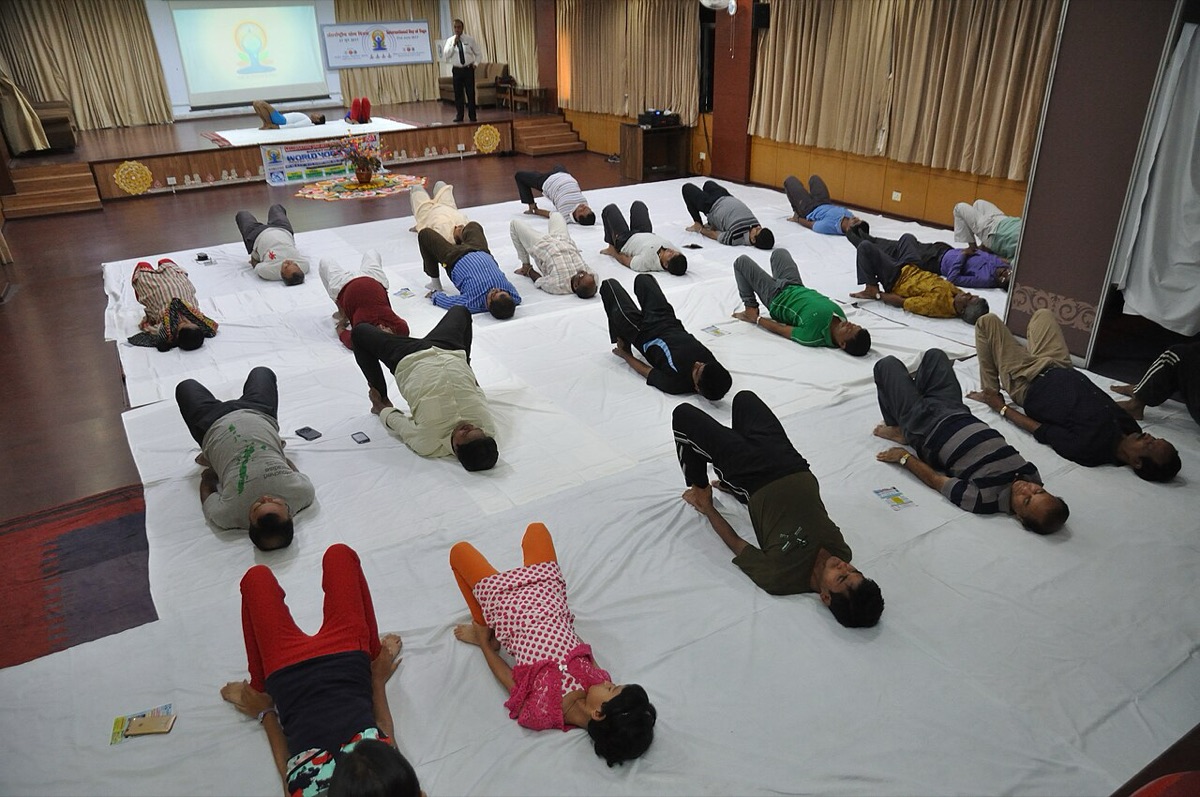
Lying on your back with knees bent, press through the feet to lift the hips. Keep the knees in line with the feet. 3 rounds of 3–5 breaths.
Tip: Strengthens glutes and hamstrings without load on the knee.
03
Supported Chair PoseUtkatasana with a chair
Stand in front of a chair and bend the knees slightly as if to sit, keeping weight in the heels. Hold for 2–3 breaths, then stand. Repeat 5 times.
Tip: Only bend as far as is comfortable.
04
Straight-Leg Raise
Lying on your back, bend one knee and keep the other leg straight. Tighten the thigh and lift the straight leg to the height of the bent knee. 5–8 slow lifts per side.
Tip: Works the quadriceps without bending the knee.
05
Reclined Hamstring StretchSupta Padangusthasana with a strap
Lying down, loop a strap or dupatta around one foot and gently raise the leg until you feel a stretch behind the thigh. Hold for 5 breaths each side.
Tip: Keep a soft bend in the knee.
06
Tree Pose with supportVrikshasana
Stand near a wall and rest one foot on the ankle or calf of the standing leg. Hold for 3 breaths per side.
Tip: Never press the foot on the knee joint.
A gentle 15-minute routine
Warm-up (3 minutes)
Sit on a chair and slowly straighten and bend each knee 10 times, then circle the ankles.
Standing (4 minutes)
Mountain Pose for 5 breaths, then 5 supported chair squats and Tree Pose with wall support on each side.
Lying down (6 minutes)
Bridge Pose 3 times, 5–8 straight-leg raises per side, and a reclined hamstring stretch on each side.
Relax (2 minutes)
Lie on your back with a pillow under the knees and breathe slowly.
Poses to avoid or modify
- Deep kneeling poses such as Vajrasana: sit on a cushion or a chair instead.
- Full squats and deep lunges: keep the bend shallow and supported.
- Twisting with a bent, weight-bearing knee.
- Locking the knees in standing poses.
- Anything that causes sharp pain, clicking with pain, or swelling afterwards.
When to see a doctor
Yoga can support comfort, mobility and relaxation, but it doesn't diagnose or treat medical conditions. Talk to your doctor before starting, especially if you have severe or sudden pain, swelling, numbness, a recent injury or surgery, or are pregnant. Stop any pose that causes pain. Get medical advice promptly if the knee is swollen, hot, locks, gives way, or you can't put weight on it.
Make it a tiny habit
After you sit down for your morning chai, straighten and bend each knee 10 times. Once that feels automatic, add 3 Bridge lifts before bed.
Frequently asked questions
Is yoga good for knee pain?
Gentle, knee-friendly yoga may help some people by strengthening the muscles around the knee and improving flexibility. It should be done slowly, with support, and alongside advice from your doctor.
Which yoga poses should I avoid with knee pain?
Deep kneeling, full squats, deep lunges and twisting on a bent knee often aggravate knee discomfort. Modify them with cushions or chairs, or skip them.
Can I do yoga with knee osteoarthritis?
Many people with knee osteoarthritis practise gentle yoga with modifications. Check with your doctor or physiotherapist first and choose a beginner or therapy-focused class.
How often should I do yoga for knee pain?
A short routine of 10–15 minutes most days is a good start. Consistency matters more than intensity.
Should yoga hurt my knees?
No. You may feel muscles working, but pain in the joint is a signal to stop or modify the pose.
General wellness information, not medical advice. Please consult a doctor or a qualified professional before starting new exercises, especially if you have a health condition.